On January 28, 2020, our AP Environmental Science class had the pleasure of welcoming guest speaker, Kent Armstrong, to talk to us about his seemingly groundbreaking process of controlling as well as cleaning up toxic waste. Despite majoring in religious studies during his undergrad year, Kent took a liking towards biology and studied Terrestrial Ecology at California State University. With his knowledge of microbes, Kent founded the company known as Terrastryke in 2008. Terrastryke is a toxic waste cleanup company that focuses on sustainable remediation techniques of hazardous waste. He described his company’s main idea as, “Attempting to leverage what mother nature already does.”
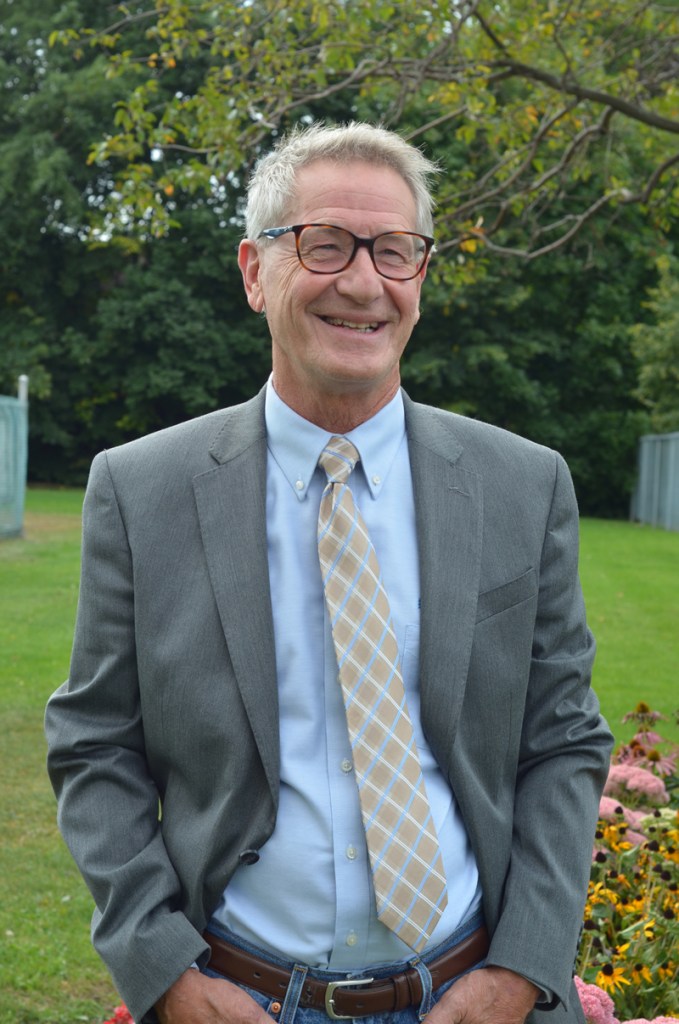
Expanding on this statement, Kent began a rough explanation of how his company uses the earth’s natural resources to their advantage. Through Terrastyrke’s process, their goal is to biostimulant microbial populations. They accomplish this by using probes to inject additives into the contaminated soil that is underground. The additives contain nutrient-rich supplements that nourish the microbes. When asked how these microbes use the additive to the benefit, Kent responded, “Depending on what we need to make them do, what we inject, kickstart them from their dormant conditions and they secondarily eat the contaminant.” The bug’s ability to secondarily eat the hazardous waste allows for a sustainable and low impact way of managing toxins in our environment.
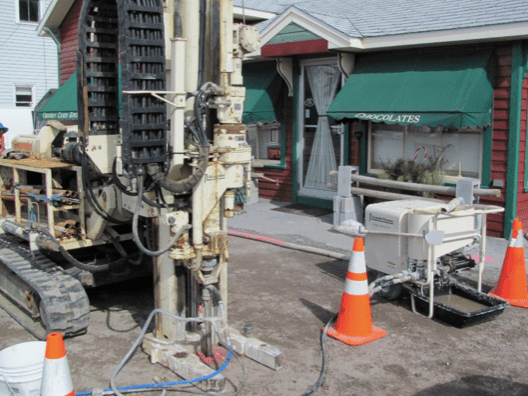
Due to their digestive capabilities, Kent explained to us that whenever the microbes group together, they create a biofilm. After conversing with Dr. Bonny Vascular, he found a relation of biofilm between the medical world and his job. When patients receive bacterial infection in anaerobic places such as hip replacement, it is generally due to a formed biofilm. Kent started with a rhetorical question, “I asked myself, why not apply that underground in our field of work? So I was able to leverage the nutrient-poor soil that is contaminated and allow a few dormant bugs to use the biofilm as food.” This biofilm acts as a reliable source of nutrients long after the additive injection, which manages the hazardous waste contamination for years to come. It allows the bugs to evolve into using that nutrient sources as their primary source of energy to enable us to understand this operation through visual representation better, Kent drew us a diagram of how Terrastryke would benefit a gas station that has a leak in an underground gasoline storage tank. The activated microbes control the discharged gasoline and prevent it from spreading to other areas such as underground reservoirs.

Wondering why this expensive process is a better option than digging out and removing the contaminated soil, Kent explained that a building with toxic chemicals under it would be forced to be torn apart to reach this soil. Even then, after the excavation process is complete, the removed soil would still have contaminants in them, which would cause toxicity at another location. In some cases, not all of the pollutants would be removed, and the remains would be able to continue its destructive path of seeping into areas such as our aquifers.
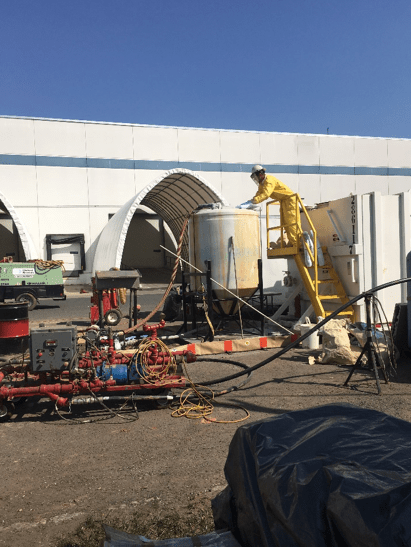
Kent Armstrong’s presentation clearly showed that he had a passion for this line of work as well as an appreciation of the world. His astonishing process of removing hazardous chemicals for underground soil is very enlightening. Using the earth’s natural resources is an incredible solution to spill cleanups. Although sometimes his enthusiasm led to a tangent, his thoroughness and relatable examples allowed the class to fully indulge his innovative solution to clean human kinds toxic mistakes. Hopefully, Kent and Terrastryke’s creativity and the eco-friendly solution will influence other companies to come up with beneficial ways to fix the ecological footprint that we have made on the planet we love.
Personally, I thought that Kent’s presentation was thrilling. I found his way of using the environment’s microbes to clean up toxic chemical spills so cool. His contagious excitement toward his job allowed me to retain the information better and even want to get more involved in the research side of toxic cleanup. I do wish that Kent reflected on how the microbes in the soil secondarily dissolved and consumed toe contaminants; however, he was pretty thorough all around. Kent is a very interesting, enthusiastic, and knowledgeable man, and I am glad that I was able to listen to him speak.
 Billy's Blog