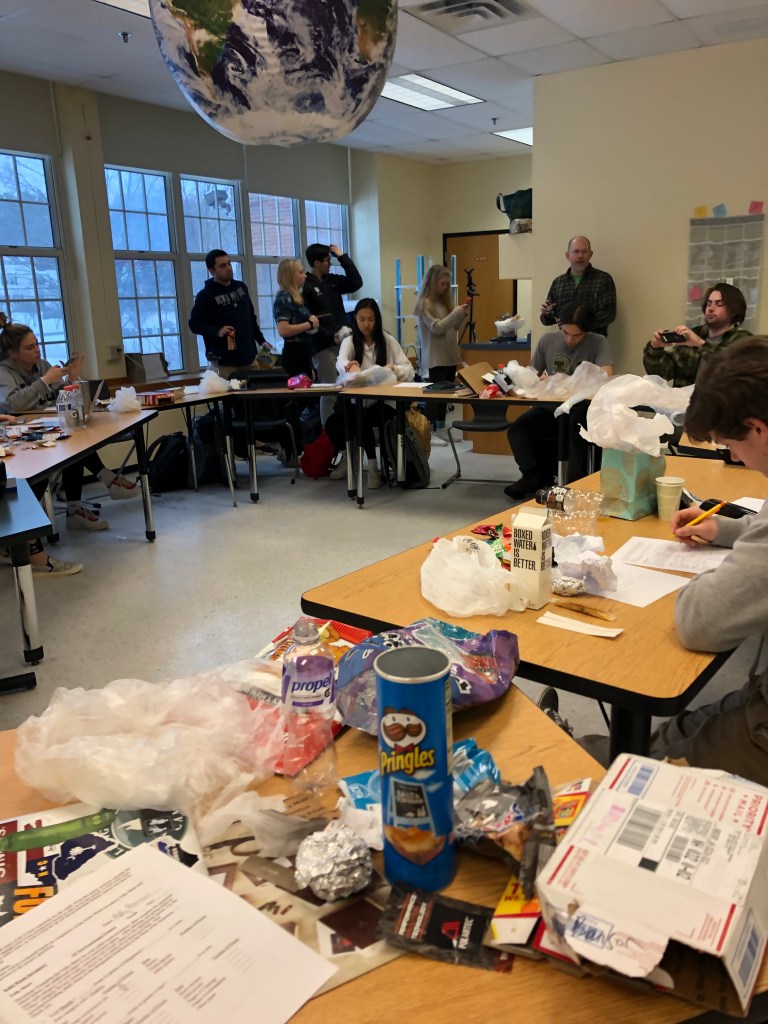
The category of municipal solid waste that seemed to be most abundant on all of the desks in the room was plastic packaging. Especially, in among the age group of teenagers who are constantly hungry
One environmental impact of the life cycle of plastics is the harm that they cause towards species of the ocean. Ingestion of these plastics can lead to various health problems such as suffocation and entanglement. Marine wildlife such as seabirds, whales, fishes and turtles, mistake plastic waste for prey, and most die of starvation as their stomachs are filled with plastic debris. Another environmental impact that plastic has on the world is their disruption of plant growth. When plastic enters the soil, it can lessen the growth of plants and trees by blocking the absorption of minerals, water, and other nutrients. Another environmental impact of plastics in today’s world is the effect that their presence in landfills has on our waters. Plastic buried deep in landfills can leach harmful chemicals that spread into groundwater and cause contamination.
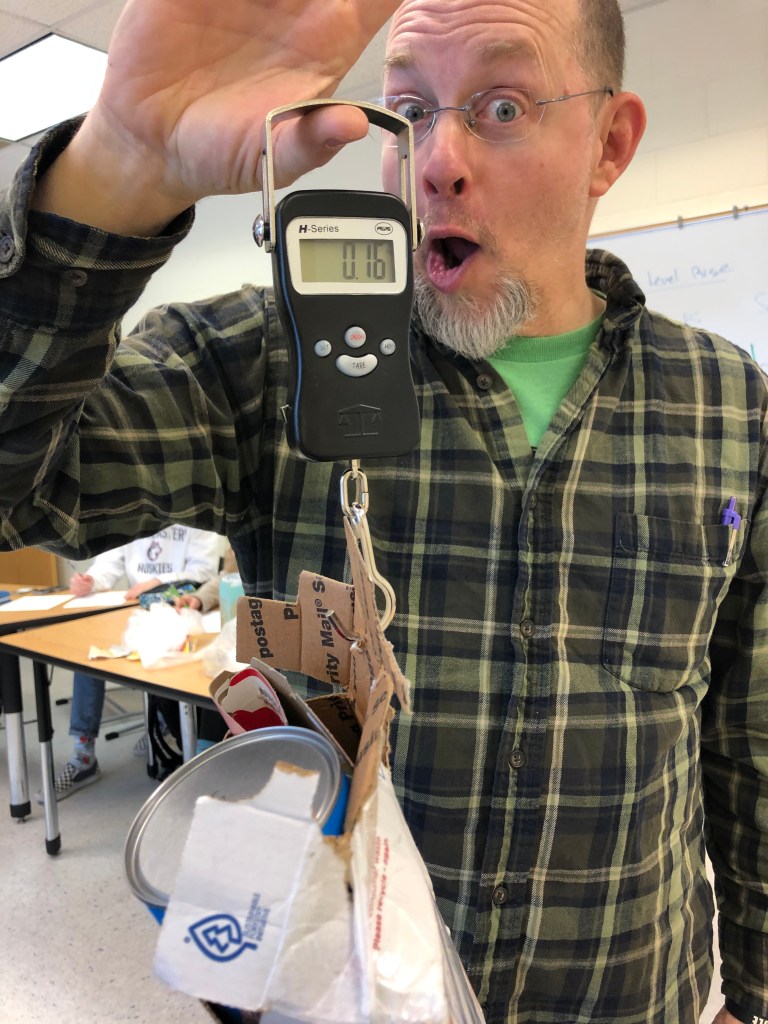
If my parents completed the exact same solid waste project, I believe that they would have a significantly more amount of waste then me. At boarding school, many incentives that limit our usage of packaging and waste are provided for us by Proctor. Options such as serving ourselves during all meals at the dining hall reduces more food packaging than if we were to go to a chipotle or any ordering restaurant. We as students also do not have easy access to grocery stores where we can constantly refill our snacks, resulting in some days, our only food option is that from the dining hall. Although the dining hall consumes food packaging when preparing our meals, buying products in bulk significantly decreases the amount of waste that is being produced. When discussing this topic with my parents, they agreed to my conclusion that they would in fact produce more municipal waste than I. Other than the large amount of food I consume outside of our daily three meals, they said I had an “unfair” advantage because I have access to an all you can eat buffet 24/7 without having to deal with packaging.

Due to the relatively small amounts of waste that I consumed, I never truly worried or modified my food choices during this experiment. In addition, when it comes to fluids, I usually only drink water out of my nalgene so I rarely have to throw away any water bottles or cans. Whenever I did produce waste it was due to my hunger which unfortunately normally outweighs the urge to resist packaged goods. Although the assignment did make me more aware of what I was consuming on a day to day basis, it never had a significant impact on what I consumed
This assignment turned out to be pretty significant and meaningful, as it allowed me to see how my consumption of good can have potential risk on the environment. It brought back many memories of my voyage on Ocean Classroom, as we were tasked with the exact same assignment except it was over the duration of a month and a half. One can never truly imagine their ecological footprint when it comes to waste consumption without creating a visual representation. Visuals like this experiment create a more meaningful impact to the person who is conducting it because they have to keep it in their possession for an uncomfortable amount of time. We as humans have evolved to the point where we now subconsciously dispose of everyday objects and then forget about it. As we have seen through images and videos, these subconscious efforts have decimating effects on our environment and assignments like these can help prevent that mindset.
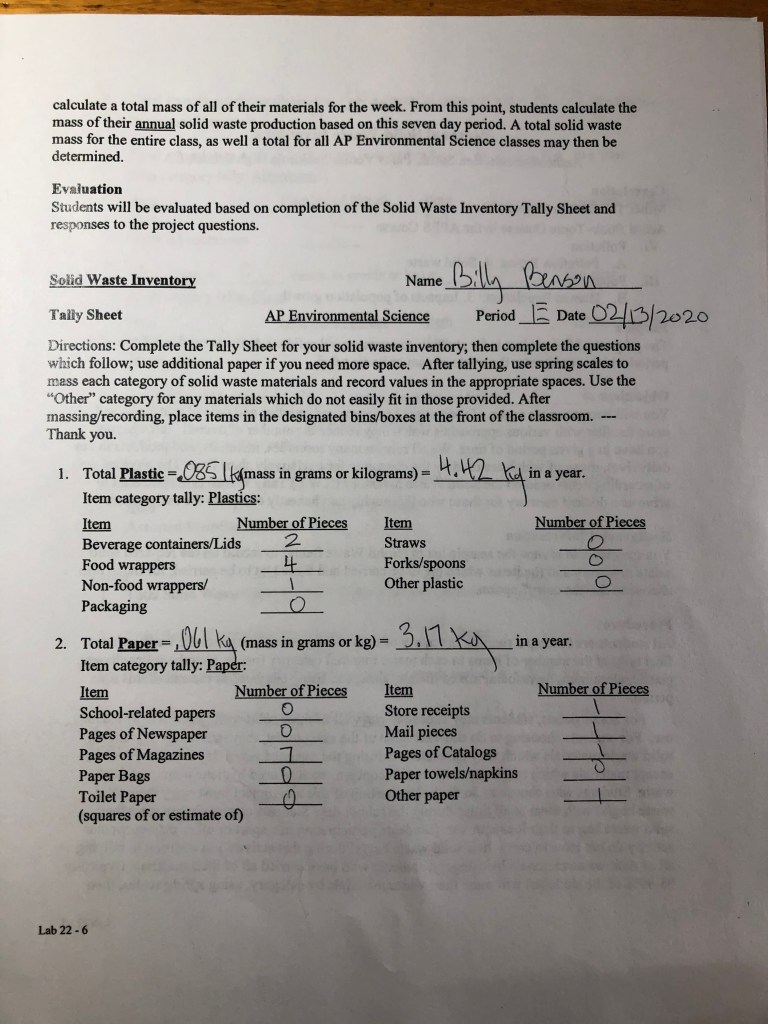
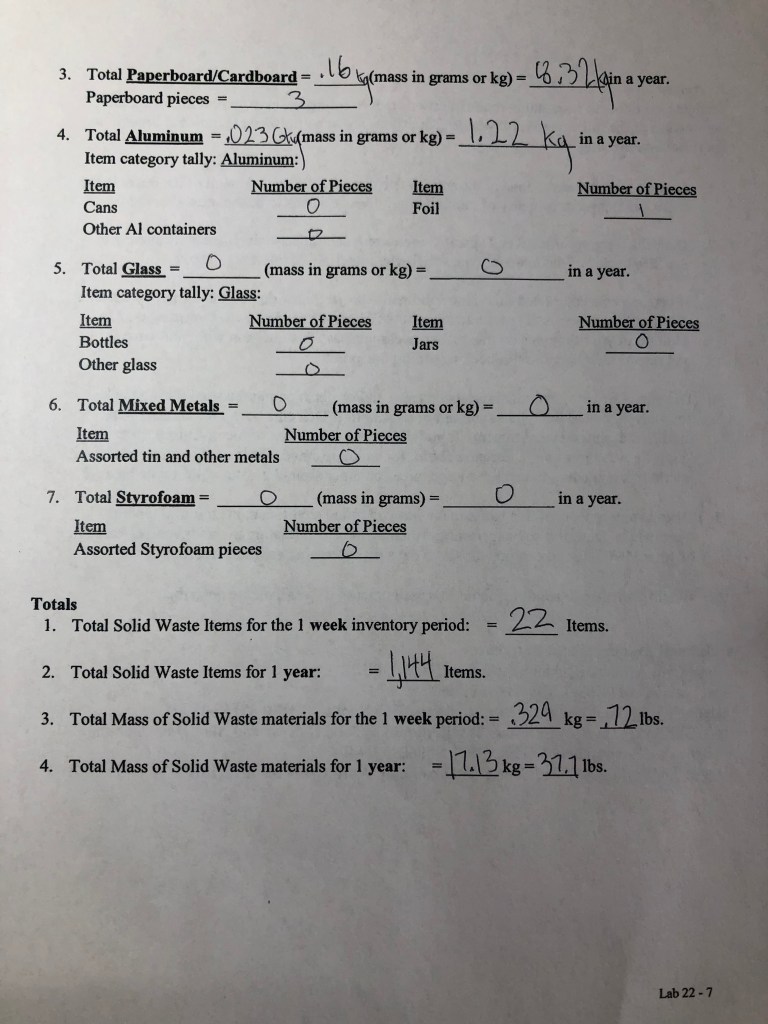
Despite the experiment running extremely smoothly, one factor that I would add to this experiment is food waste. Obviously it would be utterly disgusting to carry around rotting food for a week; however, having students take pictures of their plates and then estimating how much they had left over could be a possible replacement option.
 Billy's Blog